
The terms "takeoff" and "estimate" are often used interchangeably. While both are critical steps in the pre-construction bidding phase, they represent different activities and yield different deliverables.
Understanding the difference helps contractors coordinate their estimating department and manage subcontractor bids.
What is a Material Takeoff?
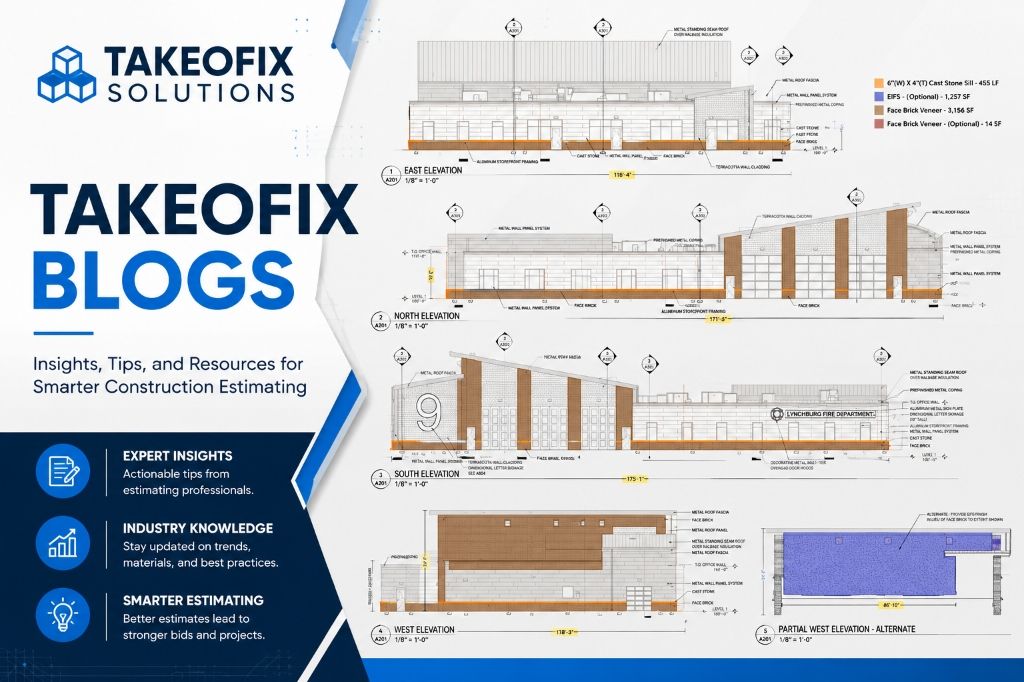
A material takeoff (also called a quantity takeoff) is the process of identifying and measuring raw material quantities from project blueprints.
The takeoff estimator's job is to answer one question: How much material does this project require?
The deliverables of a quantity takeoff include:
- Linear footages (e.g., framing studs, rebar, pipes).
- Square footages (e.g., drywall, siding, roofing membrane).
- Volumes in cubic yards or tons (e.g., ready-mix concrete, asphalt, soil).
- Individual piece counts (e.g., light fixtures, doors, CMU blocks).
A takeoff does not include unit pricing, labor rates, overhead costs, or profit margins. It is simply a clean, factual report of the material counts shown on the drawings.
What is a Construction Estimate?
A construction estimate takes the quantities from the material takeoff and applies cost factors to determine the overall project cost.
The estimator's job is to answer a different question: How much will it cost to build this project?
A complete construction estimate includes:
- Material Costs: Applying current supplier pricing to the takeoff quantities.
- Labor Costs: Calculating crew sizes, hourly wages, and production rates (man-hours per unit).
- Equipment Costs: Pricing crane rentals, excavators, concrete pumps, and scaffolding.
- Indirect Costs: Project management salaries, site cleanup, permitting fees, and safety equipment.
- Markups: Adding company overhead rates, contingency funds, and target profit margins.
How They Work Together
A construction estimate cannot exist without a takeoff. If the takeoff quantities are wrong, the entire pricing sheet becomes inaccurate, regardless of how precise your labor and material unit rates are.
General contractors often outsource the quantity takeoff phase to save time. Once they receive the verified material counts and color-coded markups from their estimating partner, they can apply their own unit prices and labor metrics to finalize the bid internally.
Final Thoughts
A quantity takeoff measures the physical scope of the drawings, while a construction estimate calculates the financial resources required to execute that scope. Recognizing this division allows contractors to streamline their bid preparation process and reduce budgeting errors.